Stronger at Any Age in Spring, TX: condition1combat.com adult martial arts training
Walk into a serious martial arts room in Spring, and you can feel the rhythm before you see the drills. Gloves tap, feet shuffle, breaths cycle under control. The students are not only twenty-somethings chasing competition medals. They are project managers who sit all day, parents navigating full schedules, and yes, men and women in their 50s and 60s who decided they were not done learning new skills. That is the picture at Condition 1 Combat Center, and it is why condition1combat.com adult martial arts training gets so much interest from people who did not grow up on the mat.
The promise is straightforward: become stronger, more resilient, and harder to rattle, without feeling out of place because of your age or starting point. The process is structured yet flexible, and it rewards consistent effort more than raw athleticism. If you live in or around Spring, TX, and the idea of building practical self-defense while improving conditioning appeals to you, this is a smart place to start.
What makes adult training different from what you remember
Adults do not learn like kids, and good programs do not teach them the same way. Adult classes at a quality school prioritize four things that matter more once you have a career, family responsibilities, and a body that has logged more miles:
- Clear progressions that respect time constraints, building from foundational movements into combinations and live application without wasting reps.
- Scalable intensity, so a beginner in their late 40s can train alongside an experienced 28-year-old without either one sandbagging or overreaching.
- Injury prevention baked into the plan, not left to chance, including warmups that actually prepare joints and ligaments, thoughtful pairings, and round structures that match the goal of the lesson.
- Real-world context, where skills are taught in scenarios you might actually face, not just in competition formats.
Condition 1 Combat Center martial arts classes follow that arc. You will see it in how the coach isolates a position, drills it, then ramps to situational rounds. You will also see it in how the room is run. Rounds start on time, instruction is specific, and students are expected to respect each other’s pace. It is professional, not performative.
The training mix: striking, grappling, and decision-making under pressure
A good adult program blends skill categories instead of siloing them. At Condition 1 Combat Center, martial arts classes cover:
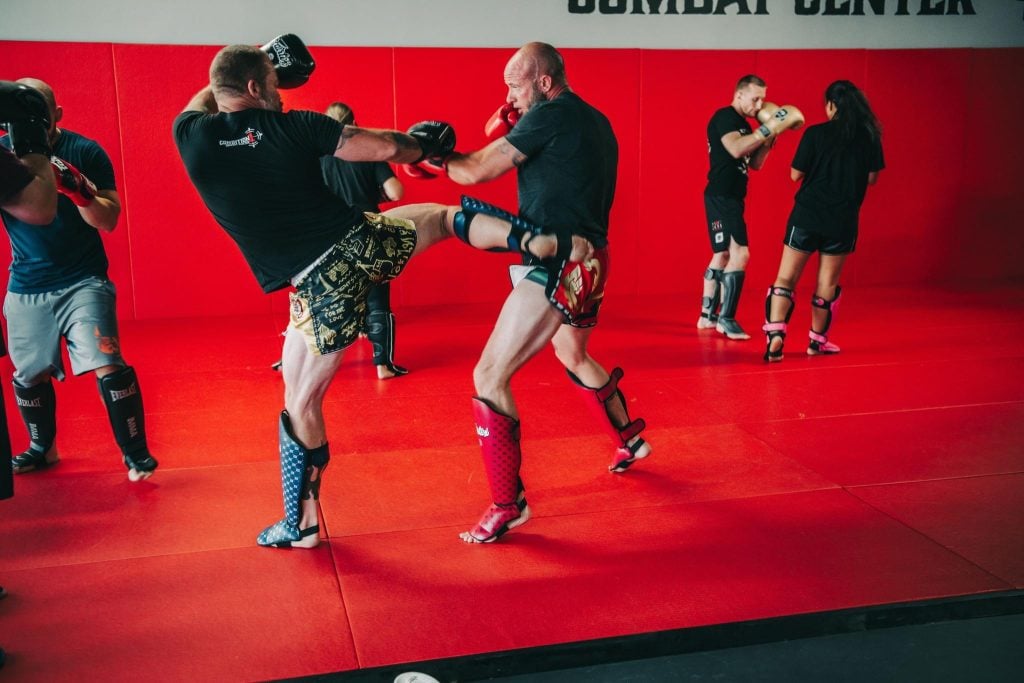
Striking fundamentals. You will learn to punch and kick with structure, which starts at the feet and hips. Expect to build a reliable jab, balanced footwork, and a guard that keeps you safe while you move. Many adults are surprised by how technical this feels, especially once you add angles and defensive layers like slips, shields, or check hooks. Striking also becomes a highly effective conditioning tool if the work-rest ratios are tuned correctly, which the coaches handle for you.
Clinch and takedown basics. Most real altercations crash into contact range. The clinch is where posture, frames, and hand fighting matter. Adult students get a workable set of tie-ups, off-balances, and takedown entries that do not rely on youthful explosiveness. Think body-locks, trips, and foot sweeps tied to head position and hip control.
Ground control. If a fight hits the floor, the person who understands base and frames usually wins. Brazilian jiu-jitsu fundamentals are part of the mix: controlling positions, managing distance, and finishing high-percentage submissions when appropriate. For self-defense, the priority is always getting out safely, not showcasing a catalog of moves.
Weapons and environment awareness. Most self-defense isn’t cage fighting, it is context. Adults practice identifying problem cues early, managing distance in tight spaces, and navigating common real-world setups like parking lots or crowded rooms. The aim is simple: avoid, de-escalate, and escape. When force is required, use it decisively and legally. Condition 1 Combat Center self defense classes avoid fantasy. They drill constraints that matter.
Through all of this, the coaches keep a steady emphasis on decision-making. Anyone can look sharp on pads when they know what is coming. The mark of progress shows up when you are slightly tired, faced with an unpredictable partner, and still able to choose the right option without panicking.
Stronger at any age is more than a slogan
At 25, you can sometimes outwork your mistakes. At 45 or 60, you build resilience by cutting out the noise and training the patterns that pay dividends. The difference shows up in how we approach volume, intensity, and recovery.
-
Volume: Two to three focused sessions per week beat five chaotic ones. Most adults in Spring juggle commutes, families, and real jobs. The curriculum at Condition 1 Combat Center meets you there. Expect class blocks of 60 to 75 minutes that combine skills and conditioning without bloating the clock. Over a typical 8 to 12 week window, you will notice measurable improvements in hip mobility, breath control under exertion, and grip endurance.
-
Intensity: Adults learn to work with rate of perceived exertion (RPE) instead of treating every round like a test. That is not a soft approach, it is a smart one. You want enough intensity to force adaptation, not so much that you cannot train consistently.
-
Recovery: Older joints have history. Mobility work, simple joint prep, and smart cooldowns remove friction from the training week. Coaches at Condition 1 guide you to scale rounds intelligently and keep a training log to spot patterns early. If your right shoulder complains after long hook sequences, we do not ignore it, we adjust volume and integrate strength drills that support the pattern.
A quick anecdote from the floor: a 54-year-old member came in carrying more stress than weight. After eight weeks of twice-weekly evening classes, his resting heart rate dropped by 8 beats per minute, and he reported falling asleep faster, which he had not done in years. He never once talked about six-packs or hitting PRs. He talked about feeling unflappable during a tense meeting and having the energy to throw a football with his kid after dinner. That is the version of strong that keeps its value.
The culture matters as much as the curriculum
Martial arts Condition 1 Combat Center classes are not a free-for-all. They operate on a few hard rules that make training safe and sustainable for adults:
-
Safety is not negotiable. Sparring has purpose, and intensity is matched to experience. New students spend time in controlled situational rounds before they ever see open sparring. When contact is introduced, it is progressive, and coaches observe every exchange.
-
Respect is enforced. You will not find chest thumping running the room. Partners are coached to give realistic looks without trying to score social points. That is why students stay.
-
Coaching is direct. Good feedback is specific and immediately actionable. Expect to hear cues like “keep your weight on the ball of the lead foot,” “frame at the hip, not the shoulder,” or “reset your stance between combinations.” Vague hype does not change behavior. Clean cues do.
Experienced adults appreciate this because it treats their time as valuable. It is also how you build competence instead of collecting random techniques.
Self-defense in Texas, clear and sober
Any place with real self-defense programming should start with two simple ideas: avoid what you can, de-escalate when you are able. That is not flashy. It is responsible. The legal landscape in Texas has its own contours, and while coaches do not provide legal advice, they do educate students on general principles. You learn about proportional response, how to create options through movement and positioning, and how to articulate why you did what you did if you are ever asked.
Condition 1 Combat Center martial arts is serious about this. Scenario work includes verbal boundary setting, non-threatening postures that keep your hands available, and timing exits. Drills might begin mid-conversation, not just from a fighting stance. The goal is competence, not bravado.
If you want to dig deeper into offerings, the most current program info and contact options live at condition1combat.com self defense classes. You can read, then visit, which is where most decisions get made anyway.
Technical foundation without shortcuts
A big part of adult success is cutting out needless complexity. You will see a bias toward high-yield tactics:
Striking, built on simple sequences. The one-two, low kick combination with footwork adjustments is a workhorse. You learn to change levels on the jab, add a frame on exit, and pivot to avoid walking into counters. That skill stack produces results in sparring and in self-defense.
Clinch, grounded in posture and head position. Many adults arrive with desk posture. In the clinch, this gets exposed fast. Coaching focuses on neutral spine, head under theirs, and inside hand position. These small details explain why an older student can neutralize a stronger opponent’s attempts to bully space.
Ground, anchored in frames and pressure. Passing guard using knee cuts and smash passes makes more sense than acrobatic movements. When escaping bottom positions, hip escape mechanics are refined until they work under resistance. You will practice them until they hold up.
Across all of this, conditioning is not a separate bootcamp tacked onto the end. It is integrated, using intervals that mirror the motor demands of the skill. That is how you build usable fitness.
Women training, and why the room composition changes outcomes
It is worth saying plainly: self-defense for women needs to be more than cardio kickboxing in disguise. At Condition 1 Combat Center, adult martial arts training includes women in the main room, not in a silo. The benefit is twofold. First, skill levels rise faster when everyone trains visit website under the same technical standards. Second, realistic partner dynamics matter. Learning to manage posture and frames against someone bigger, with a coach watching and adjusting, gives a level of confidence no mirror drill can match.
You will see smart adjustments for safety and effectiveness, like pre-agreed intensity caps and clear stopping points. You will also see women coaching other women through techniques that felt awkward at first, which accelerates learning. This is a culture choice, and it shows.
Families, schedules, and the practical side of consistency
A number of parents start training after watching their kids. Condition 1 Combat Center kids martial arts classes often run near adult sessions, which makes logistics easier. Parents drop off a child for a kids martial arts Condition 1 Combat Center class, then step onto the mat themselves. The shared language at home becomes a quiet bonus. When a nine-year-old talks about framing on the hip or keeping their hands up, and the parent knows exactly what that means, practice happens without nagging.
If you are curious about the youth side, the details sit at condition1combat.com kids martial arts, and you can see how the schedule lines up. For families, that alignment is sometimes the difference between someday and done.
Who benefits most from condition1combat.com adult martial arts training
- Beginners who want structure rather than chaos, and who value coaching that explains the why behind every drill.
- Adults returning to training after a long gap, who need scalable intensity and clear progressions.
- People who prefer practical self-defense over flashy techniques, and want scenario-based work.
- Women who want real skill development alongside men, in a room that enforces respect as a standard.
- Parents looking to train while their kids develop discipline and confidence a mat over.
What the first month usually looks like
Adults often ask, how long before this feels natural? Most notice a turning point somewhere between week three and six. Breathing cleans up. Footwork starts to show up automatically. You begin to see options in the clinch instead of freezing. The coaches track this by design, rotating focus so you get multiple looks at core positions from different angles.
Expect the early classes to emphasize stance, guard, and basic movement. Pads and partner drills build comfort. Situational rounds come next, followed by carefully moderated sparring if and when you are ready. Grappling sessions follow a similar pattern: technical warmup, positional drilling, then guided live work from a defined starting point. The process is disciplined, so your confidence grows for the right reason, real skill.
Safety and longevity: non-negotiables for adults
Nothing kills momentum like an avoidable injury. Adult martial arts training Condition 1 Combat Center treats longevity as a skill in itself. You will see:
Pre-class prep that maps to the day’s work. Hips, ankles, neck, and shoulders get time under tension with control, not rushed flailing. If the focus is clinch, expect dedicated neck and grip prep. If it is ground work, expect spinal segmentation and hip stability drills.
Partner pairing with intent. Beginners work with experienced students who know how to keep rounds honest without overpowering the exchange. When sizes are mismatched, the drill gets adjusted, not ignored.
Contact rules that fit the goal. Technical sparring stays technical. Open sparring is earned, not assumed. Hard rounds exist, but they are not the default, and they are monitored.
Post-class cooldown that is practical. Two to three minutes of breathing to bring the heart rate down, then a couple of targeted mobility patterns. It is short, it is specific, and it pays you back the next morning.
A 63-year-old grandfather who trains twice a week offered the simplest summary. He said, I feel better on the stairs. If you can climb stairs without thinking about your knees after grappling the night before, the system is doing its job.
Conditioning that matches real demands
Plenty of gyms sell intensity. Fewer can explain why their intervals look the way they do. Condition 1 Combat Center martial arts classes aim to match the energy systems to the movements. Striking rounds often live in the 2 to 3 minute range with modest density, because clean technique under moderate fatigue beats messy flurries. Grappling rounds test isometric strength and breathing control under load, so the training builds that capacity without redlining every session.
On paper, this looks like two conditioning blocks per week built into skill classes and one optional stand-alone circuit that is lower impact. Over 12 weeks, adults typically report better recovery between rounds, lower resting heart rates, and more consistent energy throughout the workday. Numbers vary, but improvements in grip endurance and hip mobility are near universal when the plan is followed.
The local factor: Spring, TX context
Training in Spring brings its own considerations. Humidity and heat affect hydration and recovery. Evening classes fill fast when school sports are in season. Commute times around the Hardy Toll Road or I-45 can stretch, which makes class start times and punctual coaching more than a nice-to-have. The team at Condition 1 Combat Center knows their room and their town, so they plan accordingly. Water breaks are real, coaches watch for heat fatigue, and the schedule respects the realities of local life.
The area also has a strong community of first responders, teachers, and energy sector professionals. Skills that improve composure under pressure are not hypothetical here. They translate to the job.
How the kids program supports the adult room
Condition 1 Combat Center kids martial arts develops more than kicks and cartwheels. It builds attention, coordination, and a sense of responsibility that shows up at home. For the adult room, that culture matters. Younger students grow into teens who know how to be solid training partners. Adults who start because their children train often become the most consistent members in the building.
If you want to compare programs, look at the continuity. Do the values you see in kids classes match what happens in the adult room? At Condition 1, they do. That alignment is a marker of a well-run academy.
A simple starting plan for new adults
- Visit condition1combat.com and explore class descriptions for striking, grappling, and self-defense. Note time slots that fit your week.
- Book a trial class when you are not rushing. Arrive 15 minutes early to meet the coach and get fitted with loaner gear if needed.
- Set a realistic target of two sessions per week for your first month. Put them on your calendar like a meeting you cannot miss.
- Keep a short training log. Write three bullets after each class: what clicked, what felt awkward, and one question for next time.
- Sort out basic gear by week two or three. Hand wraps that fit, a mouthguard that stays put, and clothing you can move in.
This plan beats ambitious sprints that burn out after ten days. Layer a third day later if life allows.
Gear, hygiene, and etiquette that make you a welcome training partner
It sounds basic, but the adults who stick around nail the small things. Keep nails trimmed. Bring a towel. Wipe down gear. If you are on the grappling side, a clean gi or rashguard is non-negotiable. Communicate with your partner before rounds begin about pace and goals. If you feel something tweak, say so. The room gets safer when adults act like adults.

Condition 1 Combat Center martial arts classes set that tone early. Coaches model it, senior students echo it, and new members pick it up fast. It is part of why retention is high.

What progress looks like after three to six months
Skill gains show in snapshots. You start seeing jabs instead of only feeling them. You recognize a level change coming and frame before your balance is broken. On the floor, you recover guard under pressure without giving up your neck. Conditioning rises in parallel. If you wear a fitness watch, expect to see lower heart rates during rounds that used to spike. Your recovery between efforts tightens. Daily life tasks feel lighter.
From a confidence standpoint, the change is steady, not dramatic. You do not feel invincible. You feel capable. If something looks wrong in a parking lot, you notice earlier. If someone gets aggressive in your space, your hands come up automatically in a way that buys you options. That is what solid training does.
Where to learn more and how to get started
If you are weighing options in Spring, TX, it helps to see a class in motion. Condition 1 Combat Center adult martial arts training runs year-round, and visitors are common. Check condition1combat.com martial arts classes to view current offerings, read about coaches, and reach out with scheduling questions. If you want to focus on self-defense applications specifically, browse condition1combat.com self defense classes to see how scenario training is structured. Parents can match their schedule against condition1combat.com kids martial arts, which outlines the youth path.
The right school will earn your trust in the first visit. You will see organized coaching, respectful partners, and a plan that treats your health as the priority. If that matches what you find on the mat, show up again. Two sessions per week, four weeks in a row, will tell you more about the value of training than any review ever could.
Martial arts classes Condition 1 Combat Center are built for adults who want to be strong, not just look it. You will sweat, learn, and leave with sharper edges and a calmer center. Stronger at any age is real if the work is consistent. In Spring, TX, you have a place to prove it.