Spring, TX Technique and Tactics: condition1combat.com martial arts classes
Spring sits in that busy corridor north of Houston where neighborhoods, small businesses, and long workdays crowd the calendar. Carving out time for training has to pay off. That is why students walk into Condition 1 Combat Center with direct goals, and why the coaching team treats technique and tactics as a single discipline, not two separate silos. The aim is practical skill that holds up when adrenaline spikes, footing gets sloppy, and the other person does not behave like a compliant partner.
This article traces how the gym’s coaching methods translate into usable defense, resilient conditioning, and calmer decision making. If you are considering condition1combat.com martial arts classes for yourself or your kid, you will find the direction, detail, and trade-offs you need to choose well.
What technique means when the stakes are real
Precision matters, but not for the reasons many assume. Technique in a controlled room looks clean. Technique in a driveway looks shorter, tighter, and messier. The bridge between those two outcomes is not a mystery. It is timing, posture under pressure, and a handful of core mechanics trained past the point of hesitation. In the Condition 1 Combat Center martial arts classes, the coaches favor techniques that degrade gracefully. If your timing is late by a half beat, the move still provides cover. If your grip slips, your posture carries the exchange while your hands recover. That is the lens used to pick and drill the curriculum.
I have watched new students move from crisp but fragile pad work to strikes that function when a partner crowds them, pulls on their sleeve, or sneaks a forearm under their chin. The difference comes from three habits trained every session: keep structure, manage range, and finish the motion with balance. A punch that returns to guard is not just a coaching note, it is a tactical anchor. The return is what protects your jaw when the return fire comes. Multiply that by every movement, and you get an approach where technique and tactics reinforce each other.
The tactical spine: ranges, decisions, and initiative
Tactics are the decisions that make technique relevant. The gym organizes tactics around ranges, not styles. Closing distance, breaking contact, and controlling the middle are treated as distinct layers, each with its own rules and risks.
Striking range rewards feints, straight lines, and the habit of moving your head first, feet second. Clinch range flips priorities, emphasizing frames, bony contact, and short strikes that do not give up posture. On the ground, the point is not only to escape or submit, but to choose an outcome that fits your environment. On a mat, a triangle choke is a win. On tile with a second person nearby, a hard stand-up with frames might be smarter. The instructors ask students, what is your objective right now, and how do you leave?
A student from Spring I trained with, a nurse who spends half her day on her feet and the other half bending over patients, struggled initially with transitions. She would commit to a takedown that pulled her into the floor even when it was not ideal. After six weeks of scenario rounds, she began to step offline, clinch, bump, and exit. That is a tactical change, not just a mechanical one.
A day on the mats at Condition 1 Combat Center
Classes at Condition 1 Combat Center martial arts do not waste the first half hour with mindless calisthenics. Mobility and activation drills target the hips, shoulders, and spine so that students spend their time learning movements they can keep at age 40, 50, and 60. Then, the instruction blocks come in layers:
- A technical core that can be explained in one sentence. For example, jam the shoulder to kill the punch, or step your hip outside to clear the knee line.
- A pressure test that increases one variable at a time, from compliant patterns to live resistance at mindful intensities.
- A tactical frame that answers when, why, and from what position the technique starts and ends.
That rhythm, technical core to pressure test to tactical frame, shows up whether the class is focusing on striking fundamentals, clinch entries, or ground escapes. It also makes condition1combat.com self defense classes more than a tour of flashy moves. The partners learn how to fail safer and recover faster.
Striking that holds up under contact
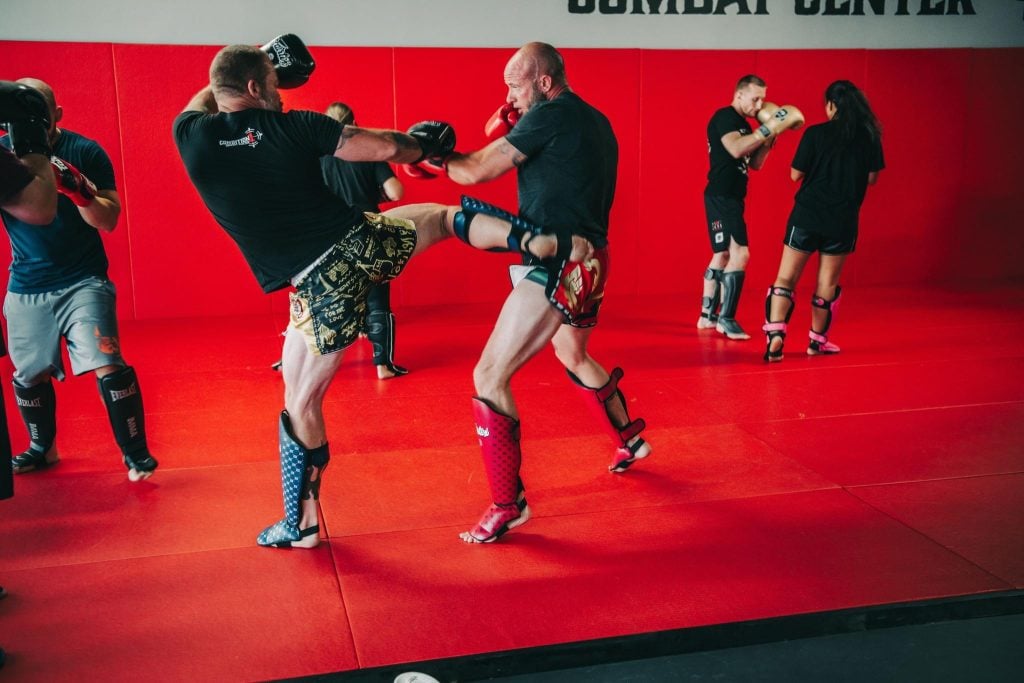
Good pad work develops mechanics, distance, and tempo, but on its own it hides two truths: the target hits back, and the target moves oddly. The striking curriculum, taught within Condition 1 Combat Center martial arts classes, tackles both issues early. Students learn to control their line with a jab that doubles as a probe. They treat the cross as a posture test, not just a power shot. Kicks are trimmed down to the ones that land with balance: low thigh kicks, oblique stomps, calf kicks judiciously used, and body kicks with clear exits.
One drill I return to often uses a jab-snap to the forehead guard while the partner applies constant forward pressure. The goal is not to “win.” The point is to land a strike that returns you to a frame you can hold even when pushed, then pivot or step off the line. After ten minutes, students stop trying to score combinations that the pressure will not allow and start investing in the tools that buy them time and space. That change in mindset is the value you want from martial arts classes Condition 1 Combat Center offers, especially if your everyday goal is simple self protection.
Clinch craft for civilians, not just competitors
Most real confrontations collapse into a clinch. If your entire plan depends on long-range strikes or a clean takedown, small surprises will wreck it. The clinch blocks taught in martial arts classes at condition1combat.com focus on wedges, head position, and short, repeatable strikes. Elbow and knee lines are present, but the class spends equal time on foot positions that keep you from being tripped during a struggle near a car door or table edge.
Consider the shoulder wedge to inside bicep tie, a position that lets you post your forehead on the cheekbone, bury your hips, and shut down the overhand. From that frame, a student has three choices: exit to space, turn the corner to a snap-down, or hit compact knees. The coaches let the partner resist at preset levels, say 30 to 50 percent, to test the structure without encouraging reckless counters. Over time, even smaller students see that they do not need to “win” a clinch in the muscular sense. They need to win the angle.
Grappling with context, not fantasy
Grappling is strategic, but in a mixed environment you will not always want to attach to a person and fall. The ground curriculum at Condition 1 Combat Center adult martial arts training uses two threads. One thread covers positional dominance, escapes, and submissions, which builds true fluency. The other thread is self defense decision making on the ground, where the favorite route is often underhook, hip escape, knee shield, stand-up. The instructors call it the route home. It respects how often environmental hazards and multiples change the calculus.
That does not mean submissions are ignored. It means they are trained with exit plans. After finishing a rear choke, can you post, check your surroundings, and get up without getting tangled? Can you choose side control over mount because you prefer the path to standing? That kind of practical reasoning is what keeps condition1combat.com adult martial arts training from becoming a highlight reel that breaks under stress.
Scenario rounds that model messy reality
The gym uses scenario rounds sparingly, and that restraint is part of why they work. Too much theater teaches bad habits. Done right, a three minute round with context forces students to solve realistic problems. Examples include: loud verbal pressure at the start, an obstacle on the mat that represents a coffee table, or a downed pad the students must not step on. Sometimes a coach assigns roles, such as a friend, a neutral person, and an aggressor, and only one of them becomes a threat. It is not drama, it is decision training.
I remember a Saturday session where students had to maintain a clinch using only frames while a coach tried to drag an extra pad into their legs. The task pushed them into thinking about foot placement and posture like chess pieces. You could watch their strike selections get shorter and smarter by the end.
Safety as a skill, not a rulebook
Good facilities treat safety as a living skill. The staff at Condition 1 Combat Center martial arts constantly coach contact management, glove etiquette, and pace control. New students learn a color system for intensity, and the person taking damage gets to choose the color. That one rule preserves longevity. Concussion history, shoulder repairs, and job requirements all get factored into pairing. You will see police officers and office workers share rounds, exercising different focus points but respecting the same guardrails. This is why retention is high and injuries trend low compared to poorly supervised rooms.
Strength, conditioning, and movement quality
You do not need to deadlift twice your bodyweight to thrive in self defense classes at condition1combat.com, though a baseline of strength helps. The coaches spend more time on hinge patterns, split stance stability, neck and grip development, and scapular control. Rounds are metabolically demanding already, so conditioning work aims for repeatability. Short power sets, low skill monostructural intervals, and breathing drills between rounds get more mileage than random exhaustion.
Students who invest ten minutes a day on two items, thoracic spine mobility and hip internal rotation, notice faster gains in techniques that require posture or angle changes. If you sit at a desk, adding a standing hip airplane or a 90-90 transition while the coffee brews will bleed straight into smoother pivots and cleaner sprawls.
Kids classes that build composure first, trophies later
Condition 1 Combat Center kids martial arts does not rush children toward belts without building the traits that matter at school, on teams, and in the neighborhood. Coaches model calm voices, eye contact, and simple choices. Drills for kids rely on games with clear constraints. Tag games become footwork class. Grip battles resemble tug-of-war, but the children learn to release and reset on command, a micro-lesson in self regulation.
I watched a shy nine year old during a kids martial arts condition1combat.com session stand tall when a louder child crowding him tried to steal his spot on the wall. He used a taught phrase, “That is my place, please step back,” then set his feet shoulder-width. The loud child blinked, then moved. No punch was thrown, but the tactic worked. For a parent, that moment is the value. The drilling that supports it includes pad work with focus mitts at heights appropriate for children, front and side falls on soft mats, and partner exercises that teach how to break contact safely. Rewards come from consistency and attention, not just athleticism.
Adult training that respects work and family demands
Time is the real currency for adults. Condition 1 Combat Center adult martial arts training is structured so a student attending two or three sessions a week can progress without needing to live at the gym. The core themes rotate, but do not vanish, which lets someone who missed a week plug back in quickly. Many students in their 30s and 40s with families train in the early evening, and the coaching staff keeps transitions tight so that ninety minutes include a warm-up that prepares, a skill block, controlled rounds, and a wrap-up with mobility. It is a professional cadence, not a hangout.
After three months of steady training, most adults see measurable changes. Resting heart rate often drops by 5 to 10 beats per minute. Hip mobility improves enough that daily aches fade. More importantly, confidence reshapes posture and tone. The person who used to shrink during heated conversations at work stands square and speaks slowly. The change is visible.
Self defense priorities for civilians in Spring
Spring is not a war zone, and good training should reflect the real risk profile. The coaches teaching martial arts Condition 1 Combat Center focus on habits that serve civilians. Awareness beats bravado. De-escalation tools come first, like verbal boundaries that buy space. Next is fence work, the raised hands and stable elbows that look nonthreatening but let you intercept a sudden shove. Then, a small set of strikes aimed at targets that end the exchange or allow escape, like the chin, ear, or thigh. Finally, breakaway skills versus grabs and a plan to create distance and leave.
Students also learn the legal and ethical frame. You can defend yourself, but you also have to justify your decisions. Understanding proportional responses and knowing when to disengage matters as much as any combination you can throw. The staff does not give legal advice, but they do nudge students to think beyond the mat.
Pressure testing without breaking bodies
Sparring has a reputation problem, either too soft and useless or too hard and injurious. The fix is structure. In self defense classes condition1combat.com, contact levels scale with intent. Technical sparring uses limited tools and specified goals, such as only jabs and footwork, or clinch entries without takedowns. Integrated rounds appear later, with headgear, gloves, and clear boundaries. Grappling rounds may start from a neutral scramble or disadvantage, with time capped to preserve quality.
A useful method here is the escalation ladder: two minutes of shadow range, two minutes of constrained contact, two minutes live with scorekeeping on one metric such as clean jabs or successful frames. Students learn to escalate sharply for a moment, then coast in control. That is the essence of tactical pacing.
Equipment and environment that support learning
The training room at martial arts classes condition1combat.com uses heavy bags, wall pads, and grappling mats that do not punish knees and ankles. Students bring mouthguards and groin protection for contact days. The staff maintains hygiene standards that are frankly nonnegotiable. Wipe stations are everywhere, and partners are taught to ask, “You clean?” before rounds. It is a culture, not a reminder on a poster. This is boring to read, until you get ringworm or a staph scare. Boring is good.
Learning to learn: note taking, review, and retention
Adults forget as quickly as they learn unless they anchor knowledge. The best students in Condition 1 Combat Center martial arts classes keep micro-notes on their phone or a pocket notebook. Three bullets after class, no more: what worked, what failed, what to ask next time. Video clips help but can distract, so coaches encourage specific questions: Did my hip move first on that elbow? Was my chin too high on the exit? Asking better questions is a skill, and the gym cultivates it.
Spacing works. A student who reviews techniques 24 hours later, then again a week later, pays less to remember the move later this month. The staff’s curriculum loops back to key mechanics monthly, so students catch new details each pass.
Trade-offs, limitations, and how to choose your path
Not every class will fit every student. If your only interest is competition grappling, a specialized jiu-jitsu academy might deliver deeper tournament prep. If you want only boxing, then a pure boxing gym will sharpen that single domain faster. The advantage of Condition 1 Combat Center martial arts is the integrated approach. You will build literacy across ranges with tactical decision-making baked in. That is better for self defense, family safety, and general resilience.
There are limits to what a few hours a week can do. Carrying yourself well lowers risk, but nothing erases it. Techniques reduce odds, they do not guarantee outcomes. Honest instruction does not sell certainty. It sells preparation, and the gym’s culture reflects that.
How kids, teens, and adults can start smart
Beginners often ask how to build early momentum. A simple plan works best:
- Commit to eight weeks, two sessions per week. Long enough to feel real progress, short enough to fit life.
- Pick one home practice, five minutes a day. Shadow footwork or hip bridges. Consistency beats volume.
- Communicate injuries and boundaries with partners before rounds.
- Wear simple gear that lets you move. Ask the staff about required protection for contact days.
- Track one metric you care about, like attendance or resting heart rate, and one skill, like clean jabs landed.
This small framework increases retention and enjoyment. It also helps parents of kids in Condition 1 Combat Center kids martial arts understand progress without obsessing over belts.
What sets condition1combat.com apart online
Plenty of gyms post glossy videos and vague promises. The useful online signals are clarity and substance. On condition1combat.com, you should look for class descriptions that name specific skills, not just buzzwords. You want schedules that show age groups and skill bands, plus notes on contact expectations. You want straightforward pricing and a way to ask questions before you commit. When you see those elements, it usually mirrors a professional in-person experience.
People searching for condition1combat.com self defense classes often arrive with a worry that feels private. It is not. New job downtown, late walks to the car, a kid dealing with a bully, a stumble with confidence after a rough patch. The right gym greets those concerns without drama. A trial class followed by a quiet conversation with a coach will tell you more than a month of scrolling.
Stories from the floor: adults and kids
Two brief examples, both real patterns that repeat often:
A mother of two in her late 30s, new to training, walked into Condition 1 Combat Center adult martial arts training with half a year of lurking behind her. After four weeks, she could frame, pivot, and leave during scenario drills with enough calm to speak clearly. She did not become a fighter. She became decisive. She also slept better, a side effect of fixed training nights that reset her weekly rhythm.
A seventh grader, small for his age, joined Condition 1 Combat Center kids martial arts after a rough semester. By month three, he had a circle of gym friends and a knack for the tie-up game that starts each class. He stopped flinching at quick movements. His teacher commented on his composure during group work. Skill changed his posture, and posture changed how others treated him.
These stories repeat because the method is consistent. Technique supports tactics. Tactics give technique a job worth doing.
Pricing, trials, and what to ask during your first visit
Every gym structures membership differently, and numbers change over time. Before you sign, ask three practical questions. What is included in a basic membership, and what combat center requires an add-on? How is contact managed for beginners? How does the curriculum revisit core skills so I do not fall behind after a missed week? If you are considering kids martial arts Condition 1 Combat Center, ask how coaches handle mismatched sizes or energies and how they teach kids to say no and create space.
Trial sessions or intro programs are common. Use them to assess culture, not just technique. Are people on time, are floors clean, do coaches learn names quickly, do students partner up easily, and do more experienced students help without showing off? These small signals predict your long-term experience.
Results you can expect and how long they take
With two to three sessions per week, most adults see multi-layer progress:
- Weeks 1 to 4: better posture, breathing under effort, basic frames and footwork.
- Weeks 5 to 8: sharper range control, cleaner exits, improved recovery between rounds.
- Months 3 to 6: composure during pressure, more efficient strikes and escapes, and clearer decision making.
Kids at condition1combat.com kids martial arts tend to show improved attention and body control within the first month, with noticeable self advocacy skills building over a quarter. The timeline varies with age and attendance, but the pattern is steady.
Final thoughts for the Spring community
The best compliment a training room can receive is that students keep showing up. Condition 1 Combat Center martial arts classes in Spring earn that by teaching skills that make sense the moment you step off the mat. The staff treats your time with respect, the curriculum links technique and tactics without fluff, and the culture encourages steady effort over noise. If you are weighing self defense classes at condition1combat.com for yourself or your family, visit, watch a class, and trust what you see in the room. The right place will feel focused, humble, and ready to help you build the kind of confidence that lasts.