Family Martial Arts Classes at Condition 1 Combat Center
Families in Spring, Texas do not need another activity that pulls everyone in different directions. Between homework, sports, commuting down I-45, and dinner on the run, quality time can feel squeezed thin. A well run martial arts program changes that dynamic. It creates a place where kids and parents train side by side or back to back, each challenged at an appropriate level, and all supported by a coaching staff that understands the reality of family schedules. That is the value of family martial arts classes at Condition 1 Combat Center, the training hub behind Condition 1 Fitness classes in Spring TX listed on condition1combat.com.
Condition 1 has built a curriculum that respects where each person starts. The team sees everyone from five year olds tying their first belt to grandparents finding a healthier routine. The common thread is progress, not posturing. You will see students learn to hold pads safely, practice combinations with clear coaching cues, and build habits that apply well beyond the mats. For many households across Spring ISD and Klein ISD, the result is a sturdy family routine that combines fitness, practical self defense, and a shared sense of effort.
What family training looks like in practice
The label “family martial arts classes” sounds neat on paper, yet the behind the scenes details make or break the experience. At Condition 1 Combat Center, you will typically see a late afternoon block dedicated to kids martial arts classes, followed by early evening adult martial arts classes. That pacing lets busy parents drop off younger children for beginner friendly instruction, watch from the sidelines, then step onto the mat themselves without a long gap. On select days, the schedule includes blended sessions where parents and kids train together in stations. This format keeps energy high and instruction focused.
A typical youth session opens with a three to five minute warm up that uses animal walks, safe tumbling, and basic footwork patterns. Coaches keep drills short, about 30 to 60 seconds per station, to match natural attention spans. You will hear concise coaching language: elbows tight, eyes up, hands back to guard. Striking practice happens on pads to avoid contact to the head for younger belts, and grappling is introduced with positional games built around balance and control rather than submissions. Safety is not a slogan here, it is visible in how classes are run.
Adult classes ramp up the complexity. After a structured mobility warm up, expect technical combinations tied to a theme, such as jab cross hook with footwork exits or hip escape series leading into guard retention. Rounds tend to be two to three minutes, with clear intensity guidelines. Beginners train on a parallel track, learning mechanics before speed. Advanced students get progression options, like adding counters or transitions. It keeps the room cohesive without holding anyone back.
Why families stick with it
Consistency is the quiet superpower of martial arts. The belt system provides visible checkpoints, but the day to day work delivers the real benefits. Parents often start for their kids, then realize the training helps them handle stress and sleep better. Kids begin to take pride in responsibilities that used to be a fight, like packing their uniform, tracking water intake, or finishing homework before class. Siblings build friendly rivalries on the mat that translate into better teamwork at home.
A mother in Gleannloch Farms told me she first searched for “martial arts classes near me” with low expectations after a rough school year. Four months later, her eight year old had gone from skipping PE to racing to tie their belt, and she had carved out three evenings a week to train right after work. The family now grocery shops once a week with training days in mind, shifting toward protein heavy dinners that are quick to prepare. That kind of ripple effect is common when a program is designed for real lives, not fantasy schedules.
Finding the right fit in Spring, TX
If you live in or around Spring, you know traffic patterns can make or break an activity. Evening congestion near FM 1960, Kuykendahl, and the Hardy Toll Road is predictable. Condition 1 Combat Center schedules account for those pinch points. Classes start at sensible times with staggered check-ins, so families can arrive without a mad dash. The facility layout helps too. Seating is arranged so parents can observe, with clear lines of sight to coaching areas. You will not feel like you are watching through a crowd.
This is where local martial arts classes stand out over one size fits all programs. A team that lives and works in the area understands the school calendars in Klein ISD and Spring ISD, the tournament schedules that matter for kids who compete, and the busy seasons for common professions in the community. Condition 1 maintains communication through a straightforward channel, often paired with the class schedule and contact information on condition1combat.com. It reduces guesswork, which is often the hidden cost of extracurriculars.
For absolute beginners
Walking into your first session can feel like stepping into a different language. Good instruction meets you where you are. At Condition 1, beginners martial arts classes are clearly marked and capped to keep coach to student ratios tight. You learn how to bow onto the mat, how to make a safe fist, and how to stand in a way that allows you to move without tripping over your own feet. Nobody expects you to know the terms. Coaches demonstrate slowly, then let you practice without a crowd hovering.
Most adults worry about fitness first. If you have not trained in years, start with twice a week for the first month. That cadence allows joints and tendons to adapt. The drills build coordination and cardio without punishing you for starting from zero. Kids benefit from the same approach. Two or three sessions a week is usually plenty for elementary ages, especially when balanced with schoolwork.

Safety, contact, and sparring, explained clearly
Families ask the right questions about safety, and they deserve direct answers. For kids, structured contact is limited and controlled. The focus rests on pad work, partner drills that emphasize distance and timing, and wrestling style games to learn body control. For teens, supervised technical sparring appears once fundamentals are solid, with headgear and mouthguards when appropriate. Adults can opt into sparring only after demonstrating good defensive skills and control. No one is thrown into hard rounds to “toughen up.” That culture saves injuries and keeps the room welcoming.
The gym maintains equipment standards that are easy to see. Clean mats, well maintained gloves and focus mitts, and posted hygiene rules. You will also see a quiet but steady enforcement of etiquette. Fingernails trimmed, shoes off the mats, and no coaching from the sidelines. These small boundaries keep the community respectful, which is the only real path to long term safety.
Program paths that fit different goals
Every family arrives with a different set of priorities. Some want confidence and focus for a child who struggles in class. Others want practical self defense, a fun workout, or a place to meet other motivated people. Condition 1 Combat Center runs multiple tracks that can be mixed during the week depending on interest.
- Youth skills and character track: belt based curriculum with age appropriate milestones, visible progress, and coach feedback that ties back to home and school habits.
- Adult fundamentals track: striking or grappling basics, footwork, defense, and core conditioning designed for people returning to fitness or starting from scratch.
- Competition path: for teens and adults who want to test skills under rulesets, with clear prerequisites, protective gear, and event planning.
- Family blended sessions: short blocks where parents and kids share drills and pad work to reinforce at home practice.
- Private martial arts classes: one on one or small group coaching for targeted goals, from catch up sessions to advanced technical development.
Those options keep things flexible without diluting the culture. A family might spend three months in fundamentals, then split, with a teenager trying the competition path while a parent sticks with blended sessions and weekend martial arts classes. Coaches guide those choices so no one trains over their head.
Affordability without hidden strings
The phrase affordable martial arts classes gets thrown around, but value sits in the structure. Transparent pricing, no surprise fees, and clear gear requirements matter. Expect an enrollment plan that lists what you need in the first month, what can wait, and what is optional. Uniforms, gloves, shin guards, and a mouthguard usually cover the basics for striking arts. Rashguard and shorts or gi for grappling. Condition 1 handles this with a short gear checklist and a reasonable timeline so families can spread purchases across a few pay periods.
Time is the other cost. A realistic schedule might look like two after school martial arts classes for a child and two evening classes for a parent. With a smart commute plan from neighborhoods like Windrose, Spring Trails, or near The Woodlands, that is manageable. The return on time invested is easier to feel than to measure. Parents report fewer behavior battles at home, better bedtimes, and a shared activity that runs on positive peer pressure rather than nagging.
After school solutions that actually help
Homework and energy management create friction for many families between 3 and 6 pm. After school martial arts classes at Condition 1 Combat Center target that window. The structure burns off nervous energy and builds a mental reset before dinner and homework. Coaches keep a steady pace and use short coaching cues, so kids get instruction without long speeches. The class ends with a quick review, often tied to a character theme like responsibility or patience. Parents leave with a talking point for the drive home.
For kids with focus challenges, consistency is the lever. The staff works with parents to set two to three checkpoints, such as arriving five minutes early, tying the belt with no help, and packing gear afterward. Small wins build into habits. Over a quarter, I have seen students move from restless and scattered to methodical and proud. Not perfect, but clearly improved. Teachers often notice the difference first.
Private training, custom goals
Private martial arts classes bring a level of attention that accelerates progress. They are ideal for scenarios like a parent who wants to learn safe pad holding to support a child, a teen preparing for a tournament, or an adult with a tricky schedule that changes weekly. A coach can compress a month of group class learning into a few targeted sessions, particularly for fundamentals that require feel rather than just explanation.
Private lessons also support injury management. If an adult is returning from a knee issue, a coach can modify stance width, emphasize upper body combinations, and build strength in ways that respect recovery timelines. That kind of individualization is difficult in a crowded class. Used well, private sessions make group classes more rewarding because you understand what your body needs.
Weekend training that respects family time
Families juggle birthday parties, church, yardwork, and catch up chores on weekends. Weekend martial arts classes at Condition 1 typically run earlier in the day, with efficient formats that pack value into shorter blocks. Think technique review, focused partner drills, and a crisp conditioning finisher. You can train, grab groceries nearby, and still have most of your Saturday.
Some weekends include specialty clinics. These might cover topics like de-escalation language for teens, grip fighting for beginners, or pad holding fundamentals for parents. The clinics give you a targeted skill set without committing to a lengthy course. Details and sign ups usually appear on condition1combat.com alongside the regular calendar for Condition 1 Fitness classes in Spring TX.
How self defense is addressed, without drama
Real world self defense is not about fantasy moves. The staff at Condition 1 sticks to principles that hold up under stress. Maintain awareness, control distance, use simple actions that you can recall when adrenaline spikes, and leave if you can. Kids learn how to set boundaries with posture and voice. Teens and adults layer in basic strikes, clinch breaks, and escapes from common grabs. The training calibrates intensity. You will practice full speed on pads and heavy bags, then slow controlled reps with partners to learn mechanics safely.
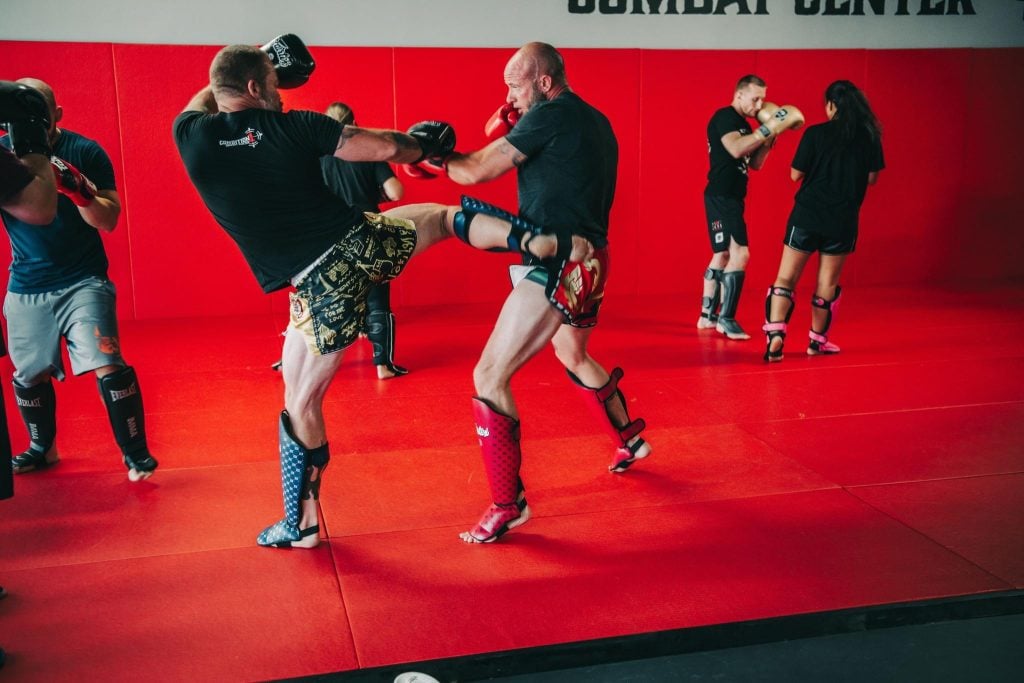
It is also about decision making. When to disengage, when to seek help, and how to scale force wisely. Coaches draw lines clearly, so students understand the responsibility that comes with capability. Nothing about this is theatrical. Instead, it is patient repetition, lots of rounds on fundamentals, and realistic scenarios woven into classes a few minutes at a time.
Culture matters more than logos
Families feel the culture of a gym within five minutes of walking in. Do coaches greet students by name, or do they glance past and keep talking? Do advanced students help beginners, or do they roll their eyes? Are kids encouraged to ask questions, or shushed to keep pace? At Condition 1 Combat Center, the best indicator of culture is how transitions are run. Kids line up quickly, partners are assigned thoughtfully, and corrections are delivered with specifics, not sarcasm. Adults get the same respect. That environment draws people who plan to stay, not just sample.
Consistency on the coaching staff is another leading indicator. When you see the same core group of instructors month after month, you know the program is stable. Students progress faster because cues are consistent. The curriculum does not lurch from one trend to another. That stability shows up on the mat in how students move and how they treat one another.
What to expect in your first month
It helps to know what the arc looks like when you start. Here is a common pattern for families beginning at Condition 1.
- Week 1: Learn gym etiquette, stance, basic guard, and how classes flow. Expect mild soreness in places you did not know existed.
- Week 2: Combinations feel less clumsy. Kids begin to mirror the class rhythms, and parents figure out the bag drop and water routine.
- Week 3: Confidence bumps. You will ask better questions, which is a sign you are paying attention to details that matter.
- Week 4: Habits start to stick. Attendance settles into the family calendar, and you begin to notice carryover, like better posture at work or calmer bedtime routines for kids.
- End of Month: Review with a coach. You get an honest assessment and a suggestion for what to focus on next month.
That progression is not linear for everyone, but it is common enough to plan around. If a week goes sideways due to work travel or school events, no one makes you feel behind. Coaches help you re-enter with a clear focus, which condition 1 combat center beats trying to muscle through at random.
The practical checklist before you visit
You do not need much to get started. A water bottle, comfortable athletic clothes, and an open mind cover day one. If you choose to enroll, the front desk will walk you through any uniform or gear orders. Plan to arrive ten minutes early to sign a waiver and meet your coach. If you are comparing options after searching for “martial arts classes near me,” bring a short list of questions that matter to your household. Ask about class caps, coach to student ratios, and how they integrate newcomers. See how the answers feel. You are not just buying classes, you are joining a training culture.
Parking and logistics matter in Spring, so check the route around typical traffic on Kuykendahl or Louetta. If you are heading from The Woodlands, keep an eye on rush hour near the I-45 exits. Small planning touches reduce stress, and lower stress makes it easier to build a routine.
How Condition 1 balances fitness and skill
Some gyms lean hard into sweat with little technical depth. Others obsess over technique and forget that most adults want to feel like they worked. Condition 1 Fitness classes in Spring TX sit in the smart middle. Classes build real conditioning, but not at the expense of mechanics. You learn to produce force safely, breathe under effort, and apply moves in a way that would work outside a choreographed drill. Coaches track themes over weeks, so you revisit key positions and combinations often enough to own them.
This deliberate structure helps families at mixed experience levels train under the same roof. A parent might focus on defense and counters while a teen adds advanced entries. A beginner hits clean reps at moderate pace while an experienced partner adds footwork layers. Everyone leaves with purposeful reps on the same theme, and nobody feels either bored or overwhelmed.
The role of accountability, handled kindly
One reason families fall off activities is the slow drift of missed sessions that no one addresses. Condition 1 builds light accountability into the process. Attendance is tracked. Coaches check in if you disappear for a couple of weeks. Kids earn stripes or small milestones for consistent effort, not for raw talent. Adults get straightforward feedback about where to invest attention. It is not pressure, it is support. The staff understands that life happens, but they also know momentum matters. A quick text or conversation can be the nudge that gets you back on track.
Links, contact, and staying current
Schedules, updates, and event details change across the year, especially around school breaks and holidays. The simplest way to stay aligned is to check condition1combat.com for the current calendar and any notes about holiday hours or special clinics. If you are searching directly for Condition 1 Fitness classes in Spring TX, you will see contact options there alongside program descriptions for kids, adults, beginners, and family blended sessions. You can also reach out to the front desk for a trial class slot. Slots are limited during peak hours to keep classes from crowding, which is a good sign that the gym values instruction quality over headcount.
Final thoughts from the mat
Families thrive in environments that pair structure with humanity. Martial arts training, when taught well, does both. It gives kids a framework for effort and respect, and gives adults a way to train that feels both useful and sustainable. At Condition 1 Combat Center, the culture is practical and the outcomes stack up over months, not just single exciting workouts. If your family is weighing options after scrolling through pages of local martial arts classes and ad results for every variation of Condition 1 Fitness classes in Spring TX, narrow your focus to a visit and a trial. Watch a class. Talk to a coach. Picture your week with two or three sessions in it. If that picture feels doable, you are halfway there.

Martial arts should add energy to a household, not drain it. Done right, it becomes the hour everyone looks forward to, the routine that steadies a rough day, and the shared vocabulary you use long after shoes are back on and dinner is on the table. Condition 1 has shaped its program around that simple goal. Families show up, work hard, learn well, and go home closer than when they arrived.